Kentish Town House Clearance

Kentish Town house clearance is a practical service for homes that need rooms, lofts, garages, or entire properties emptied with care and organised handling. We clear furniture, mixed household contents, and general unwanted items in a way that supports straightforward decisions for owners, landlords, and agents. The aim is to leave the property ready for its next step, whether that is sale, letting, renovation, or a simple reset after a change in circumstances.
We work across house clearance needs with an emphasis on sensible sorting, safe lifting, and clear communication about what is being removed. Where a property contains a mixture of reusable furniture, broken items, and ordinary household goods, the job is usually easier when each part is handled methodically. That means separating materials where appropriate, keeping walkways clear, and treating items carefully until they are ready to go.
For a clear starting point, tell us what needs clearing and what type of property it is, then we can discuss the most suitable way to approach the work. If you are comparing options, our service pages give a useful overview of related clearance types. You can also request a quotation once you are ready to move forward.
What our house clearance service covers
A typical Kentish Town house clearance may involve one room, several floors, or a whole property, depending on what needs to be removed. We can deal with furnishings, white goods where suitable arrangements are made, general clutter, and items that have built up over time. In many homes the practical challenge is not only the volume of goods, but also moving them safely through narrow stairs, shared entrances, or tightly arranged rooms.
Our approach is to keep the work organised and proportionate to the property. In a smaller flat, that may mean careful collection from limited access points. In a larger house, it may mean staging the clearance room by room so the remaining items stay protected. If you need related help, the house clearance and home clearance pages give a clear picture of the main domestic services we provide.
Where furniture is part of the clearance, it helps to think about condition and removal order. Heavier pieces often need to come out first, while smaller items can be gathered and sorted as the space opens up. We also use the same careful method for contents that are mixed or awkwardly packed, because that often reduces disruption and helps the property stay manageable during the job.
Furniture, rooms and items that need careful handling

Many clearances include furniture that is still serviceable, items that are worn, and belongings that no longer fit the space. When that happens, a measured approach matters more than speed alone. Solid, careful handling protects walls, stairs, floors, and the items you want to keep. It also helps ensure that anything suitable for reuse can be separated from general waste in a sensible way.
If your main concern is a few large pieces rather than an entire property, our furniture clearance and furniture disposal services may be the closest match. These are useful when the job is centred on sofas, wardrobes, tables, beds, or other bulky household pieces. We can also incorporate those items into a wider house clearance where the property contains a broader mix of contents.
Practical preparation is usually simple. Make a brief note of anything that must stay, anything you would like removed first, and any items that are especially awkward to carry. If you can open access points and keep smaller valuables separate, the clearance can be organised more efficiently. For many customers, that is enough to make the visit smoother without adding unnecessary work beforehand.
Lofts, garages and storage spaces
House clearance often extends beyond the main living rooms. Lofts and garages can hold decades of accumulated belongings, seasonal items, broken furniture, archive boxes, and mixed storage that no longer has a practical place in the property. These spaces are often awkward because of low headroom, dust, insulation, or tight stair access, so the clearance needs to be carried out with extra care.
Where the work is concentrated in one storage area, the right service can save time and reduce disruption elsewhere in the home. Our loft clearance and garage clearance pages cover these more specific tasks, while the wider house clearance service remains suitable when storage spaces are only part of a larger job. We keep the same organised method whether the property is a family house, a rented flat, or a home being prepared for handover.
It often helps to think about the clearance in sections: what is in the loft, what belongs in the garage, and what should stay with the household. That simple grouping makes it easier to plan the removal order and spot items that may need separate handling. If you need a broader view of domestic and outbuilding work, the same service can be adapted without turning the process into a complicated exercise.
When a flat or whole home needs clearing
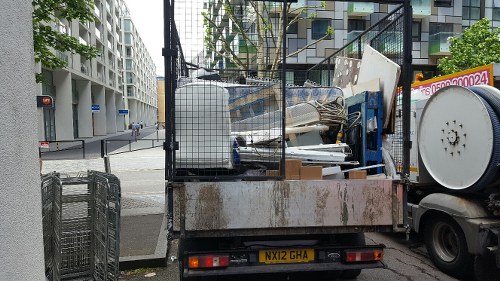
Some customers need a full house clearance after a move, refurbishment, or change in occupancy; others only need a flat cleared before keys are returned. The practical difference is usually access and layout rather than the basic task. Flats may involve lifts, shared hallways, or parking restrictions, while whole houses may have more rooms but easier circulation inside the property.
For smaller homes or upper-floor properties, our flat clearance page is relevant when the job is focused on apartments and similar living spaces. If the contents are spread across an entire property, house clearance remains the main option. We can also handle broader home clearance needs where the situation includes a mixture of rooms, storage areas, and general household contents.
In practice, the best results come from a tidy sequence of removal rather than trying to carry everything out in the most direct line possible. That sequence may change depending on stairs, access, parking, or the size of larger furniture. A methodical process matters because it keeps the property easier to navigate and makes it simpler to finish the work without disturbing items you intended to keep.
How we approach domestic clearance work
Domestic clearance is usually more manageable when it is broken into clear decisions rather than treated as one huge task. We look at what is staying, what needs to go, and what may need separate attention because of size, condition, or access. This is particularly useful in homes where the contents range from everyday furniture to old boxes, mixed storage, and items that need careful lifting.
For customers comparing related services, the waste removal page can help when the main issue is general domestic material rather than a full contents clearance. If the project includes a lot of structured waste from a refit or repair, builders waste clearance may be a better fit. We can advise on the most appropriate option once we understand the scope of the job and how the property is arranged.
There is no need to overcomplicate the first step. A short description of the rooms involved, the main items present, and any access concerns is often enough to begin. If you are unsure whether a service should be booked as a house clearance, a flat clearance, or something more specific, we can help you identify the closest match before any work is arranged.
About Kentish Town
Kentish Town is an area of north London in the London Borough of Camden, lying between Camden Town and Tufnell Park and stretching towards Highgate and Gospel Oak. Its character reflects a long history of suburban growth, railway development and steady urban change. The district developed from a small settlement on the road north from London and later became part of the wider expansion of inner north London in the nineteenth century, when housing, transport links and local commerce grew rapidly. Today it remains a mixed residential area with busy main roads, quieter side streets and a varied building stock that includes terraces, converted properties and later apartment schemes. Kentish Town Road forms one of its best-known thoroughfares, while the local station connects the area to wider parts of the capital through the Northern line and rail services. The neighbourhood is also close to larger green and cultural landmarks, with Hampstead Heath to the west, Regent’s Park to the south-east and the wider Camden area nearby. Local life is shaped by everyday retail, restaurants, schools, places of worship and music venues, giving the district a strong sense of ordinary city activity rather than a single dominant landmark. Some parts retain older layers of architecture, while other streets show the more practical rebuilding and adaptation typical of inner London. That mixture of period housing, transport infrastructure and active street frontage gives Kentish Town a distinct identity within Camden, balancing residential calm with the movement and density expected of a well-connected urban neighbourhood.
Rooms, access and quotation details
When a quotation is being prepared, the most useful information is usually straightforward: which rooms or storage spaces are involved, whether there are large items, and whether access is easy or constrained. If a property has stairs, shared entrances, limited parking, or items in a loft or basement, those details help define the scale of the work. The clearer the picture, the easier it is to match the service to the property without adding unnecessary extras.
In many cases, the best quotation is based on a simple description rather than a lengthy explanation. A list of the main furniture pieces, the amount of household contents, and any items needing special handling is often enough to start. If the clearance is part of a move, probate arrangement, tenancy end, or refurbishment, that context can also help us understand the time and method likely to be involved.
If you are ready to compare options, you can ask for a quotation now and use the service pages to refine what is included. The pricing and quotes page gives a useful route for that next step, especially when you want to understand the main factors before booking. A brief enquiry is usually the easiest way to move from planning to action.
Support for landlords, agents and property owners

House clearance is not only for occupied homes. Landlords, letting agents and property owners often need a property emptied between tenancies or before marketing begins. In those situations, the main concern is usually to restore the space to a workable condition while respecting what remains in the property. The work can include mixed contents, abandoned furniture, and stored items that need checking before removal.
Where the job involves a rental property, a probate property, or a home being prepared for refurbishment, the about us page provides a simple introduction to the business, while contact us is the natural next step when you are ready to discuss the practical details. We keep the process focused on the task in hand rather than adding unnecessary complexity. If the property contains items that could be separated, that can be incorporated into the clearance plan.
Two useful things to prepare are a short inventory of major items and a clear note of anything that must remain. That does not need to be formal; it is simply a practical way to avoid confusion on the day. Keeping the instruction simple usually helps the work progress without delay, especially when several people are involved in the handover or the property is being managed remotely.
Other related clearance services
Not every job starts as a full house clearance. Sometimes the correct answer is a more specific service that deals with one part of the property or one category of material. We offer related options for offices, businesses, gardens and general clearance work, so customers can choose the closest fit instead of booking a broader service than they need.
Relevant pages include office clearance for workspaces, business waste removal for commercial premises, and garden clearance where outdoor spaces need attention as well as indoor rooms. These services are useful when the property type or material mix makes a dedicated approach more appropriate. The right choice depends on what is being removed and how the space is used.
In many cases, the simplest route is the best route. If you are unsure whether your job fits a house, flat, loft or furniture-led clearance, a short description is usually enough to point you in the right direction. From there, the work can be scoped sensibly and the quotation can reflect the actual task rather than a guess.
Planning the job and choosing the right service

The most efficient clearance jobs usually begin with a realistic view of the property rather than a wish to clear everything at once. A house with several floors, a loft, or a storage-filled garage may need a different approach from a compact flat with only a few bulky pieces. Understanding the layout helps us match the service to the task and avoid unnecessary handling or duplicated work.
As a final practical note, it helps to separate three simple questions before you get in touch: what is being removed, what must remain, and whether access is straightforward. Those questions are often enough to define the likely scope. If the answer points to a broader domestic job, house clearance is usually the central service; if it is mainly furniture, storage, or a single room, a more specific page may be the better fit.
For a clear next step, request a quotation when you are ready and we can discuss the best match for the property. The service is designed to be practical, adaptable and focused on the contents you want removed. If you have a domestic clearance in Kentish Town, the quickest way forward is to ask for the right option rather than trying to force the job into the wrong category.