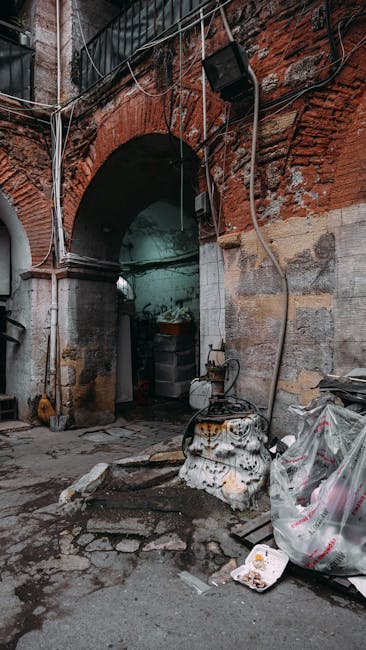
Fortess Road Kentish Town rubbish removal for tight access properties
Fortess Road in Kentish Town has a very particular rhythm to it: period terraces, side passages that narrow fast, shared entrances, basement steps, and the sort of awkward corners that make rubbish removal feel much harder than it should. If you are dealing with bulky waste, old furniture, builders' debris, or a full property clear-out, tight access changes everything. It affects how quickly a job can be done, what vehicle can be used, how many crew members are needed, and whether the waste can be moved safely without damaging the property.
This guide explains how Fortess Road Kentish Town rubbish removal for tight access properties works in real life, what to expect, and how to avoid the usual headaches. We will look at planning, access checks, methods, compliance, pricing factors, and practical tips for homes and flats where stairs are narrow and the kerbside is not always close by. If you want a smoother, cleaner clearance with less stress, you are in the right place.
Contents
- Why Fortess Road Kentish Town rubbish removal for tight access properties matters
- How Fortess Road Kentish Town rubbish removal for tight access properties works
- Key benefits and practical advantages
- Who this is for and when it makes sense
- Step-by-step guidance
- Expert tips for better results
- Common mistakes to avoid
- Tools, resources and recommendations
- Law, compliance, standards, or best practice
- Options, methods, and comparison
- Case study or real-world example
- Practical checklist
- Conclusion
- Frequently asked questions
Why Fortess Road Kentish Town rubbish removal for tight access properties matters
Tight access is not a small inconvenience. It changes the whole shape of a rubbish removal job. On streets like Fortess Road, the challenge is often not the waste itself, but the path to get it out. A sofa may fit through a front room doorway, but not around a bend on the stairs. A fridge might need careful handling on a narrow landing. Garden waste may have to be carried through a house because the rear gate is too tight for a van to reach. That is where planning matters.
For residents and landlords, this matters for three big reasons. First, there is safety. Heavy lifting on awkward stairs or uneven pavement increases the chance of knocks, slips, and damaged walls. Second, there is time. What looks like a quick collection can take much longer if the team must carry each item a long distance by hand. Third, there is cost control. If access is unclear, the wrong vehicle or crew size can make the job more expensive than it needed to be.
Let's face it: many properties in Kentish Town were not designed for modern bulk waste and oversized household items. That does not mean removal is difficult in practice, just that it needs the right approach. The best rubbish removal service for a tight access property is one that can adapt to the building rather than forcing the building to fit the job.
If you are comparing options for a wider property project, it can also help to look at broader services such as home clearance, flat clearance, or house clearance. Those services often overlap with access-challenged jobs, especially in older London homes.
How Fortess Road Kentish Town rubbish removal for tight access properties works
The process usually starts with access questions, not loading questions. A good clearance team will want to know where the waste is located, how it needs to be moved, whether there are stairs, whether parking is close enough for a vehicle, and whether there are shared hallways, coded doors, or limited-time loading restrictions. That early detail saves hassle later. A lot of hassle, actually.
In practical terms, the job usually follows a simple sequence:
- Assessment - The team checks what needs removing and how the waste can be accessed.
- Planning - They decide whether the job needs extra crew, smaller lift-out items, a dolly, sack trucks, or short-carry loading.
- Protection - Floors, corners, and doorframes may be protected if there is a risk of scuffs or impact.
- Removal - Items are carried out carefully, usually in manageable loads rather than all at once.
- Sorting - Reusable items, recyclable materials, and general waste are separated where possible.
- Transport and disposal - Waste is taken away for appropriate processing and disposal.
For tighter spaces, a smaller vehicle or a more flexible loading approach can make a huge difference. On a busy street, the aim is often to minimise the amount of time the team spends blocking entrances or making repeated trips to the van. That is why route planning matters as much as muscle.
In some cases, items can be removed in pieces. A wardrobe may be dismantled on site. Bed frames, shelving, and certain office items can often be broken down first, which makes movement safer and quicker. For that sort of work, pages like furniture clearance and furniture disposal are useful references because they show how bulky items are handled responsibly.
And if the job involves old renovation waste rather than household clutter, the approach changes again. Builders' rubble, timber offcuts, plasterboard, and mixed site waste are better handled under a service such as builders waste clearance. Different waste, different handling, same access challenge.
Key benefits and practical advantages
The main benefit is simple: a job that would be awkward for most people becomes manageable. But the real advantages go deeper than that.
- Reduced physical strain - No one wants to drag a broken wardrobe down three flights of stairs by themselves.
- Less damage risk - Careful handling reduces the chance of chipped paint, scuffed walls, and scratched floors.
- Faster turnaround - A well-planned team can clear more waste in less time, even when access is tight.
- Better waste separation - Recyclable items can be handled properly rather than bundled into one mixed load.
- Cleaner end result - The property is left ready for letting, sale, refurbishment, or simply a calmer daily life.
There is also a quieter benefit that people notice only after the job is done: headspace. A hallway full of old boxes, broken chairs, and bagged clutter can feel strangely heavy. Once it is gone, the whole property feels easier to live in. You hear your own footsteps differently. Bit dramatic, maybe, but true.
If your rubbish removal is part of a larger reorganisation, you may also find that related services such as garage clearance, loft clearance, or garden clearance make sense. Tight access often shows up in all the usual hiding places.
Who this is for and when it makes sense
This type of rubbish removal is useful for a wide range of people in Kentish Town. It is not just for one-off emergencies. In fact, many jobs are planned, practical and fairly ordinary, just with a difficult route in or out.
- Flat owners and tenants - especially where stairwells are narrow or shared access is awkward.
- Landlords and managing agents - after tenancy changes, probate clearances, or repairs.
- Homeowners on terraced streets - where rear access is limited or parking is tight.
- Small businesses - when office furniture, packaging, or stock needs removing from compact premises.
- Renovating households - when builders' waste must be moved carefully through a finished property.
It makes sense whenever the waste is too bulky, too heavy, too many in number, or too awkward to move without support. Truth be told, the turning point is often when people realise they could do it themselves, but should they? That is the better question. If the access is tight, self-removal can quickly become a safety issue.
For businesses in particular, a planned approach matters. Office moves, refurbishments, and clear-outs can benefit from office clearance or business waste removal, especially where the building has one narrow entrance and very little room to spare.
Step-by-step guidance
If you want the smoothest result, think in stages. A little preparation at the start can save the most effort later on. Here is a practical way to approach it.
- List everything that needs removing
Separate furniture, bagged waste, appliances, DIY debris, and anything reusable. A rough list is enough at first. - Check the access route
Measure doorways, stair widths, hall turns, basement steps, and any tight landings. If a large item only just fits, mention that. "Just about" often means "not really" on the day. - Look at parking and loading
Can a van stop nearby without causing problems? Is there a loading bay? Are there any time restrictions? Even a short walking distance changes the job. - Identify fragile points
Point out bannisters, glass panels, low ceilings, pipes, or recently decorated areas. Good crews can plan around them. - Ask what happens to the waste
Recycling, reuse, and responsible disposal should be part of the answer. That is especially relevant if the job includes mixed household waste or old furniture. - Choose a service that fits the property
For some jobs, a full clearance is best. For others, a targeted collection is more sensible. The right choice depends on the volume, the access, and how quickly you need it done.
If you are unsure how to describe the job, take a few photos of the route, the waste, and the access point. That usually clears up confusion fast. A phone call can help too, but visual context is worth a lot when stairs and corners are involved.
For quick pricing context, a dedicated page like pricing and quotes can help you understand what factors are likely to affect the estimate, while contact us is the sensible next step if you need to discuss a tricky layout.
Expert tips for better results
Here are a few practical habits that make tight-access rubbish removal go more smoothly. Nothing fancy. Just the kind of detail that saves time and a bit of sanity.
- Clear the path before the team arrives - Move coat stands, plant pots, loose bikes, and shoes out of the way. Small obstacles become big ones on narrow stairs.
- Keep waste grouped by type - It helps the crew load efficiently and avoids last-minute sorting in a cramped hallway.
- Tell the team about parking quirks - A suspiciously empty road can still hide restrictions. London has a way of doing that.
- Make sure children and pets are elsewhere during loading - Tight access jobs need focus. A darting dog or curious toddler changes the pace instantly.
- Use dismantling where practical - Flat-pack furniture, bed frames, and some shelving units are easier to move in pieces.
- Protect surfaces if you are DIY-preparing - Cardboard, dust sheets, or floor coverings can help, but only if they do not create trip hazards.
One thing people often miss: access is not just about width. It is about rhythm. If a corridor has three turns and a low ceiling, a bulky item can still be impossible to move cleanly even though the tape measure says yes. In our experience, that is where a careful on-site approach beats guesswork every time.
If your job includes mixed refuse and recurring waste, it may be worth reviewing broader support pages such as waste removal and, where sustainability matters to you, recycling and sustainability. Those pages help set realistic expectations about responsible disposal.
Common mistakes to avoid
Most problems on tight-access jobs are preventable. The awkward part is that the mistake often feels small until the van arrives and everyone is suddenly trying to squeeze a mattress around a corner. Not ideal.
- Underestimating item size - A sofa can look manageable until it meets a staircase bend.
- Forgetting about parking - If the van cannot get close, the job takes longer and may need extra labour.
- Leaving access notes too late - Tell the provider about narrow doors, cellar steps, or shared entrances before the booking is confirmed.
- Mixing rubbish with items you want to keep - Once loads are moving, accidental disposal can happen. Label or separate clearly.
- Ignoring fragile surfaces - Fresh paint, polished floors, and old plaster can mark easily.
- Assuming every item can be collected as-is - Some things need dismantling, bagging, or special handling first.
Another common issue is choosing a service based only on price. Cheapest is not always cheapest, especially when access is difficult. If the crew turns up unprepared, the job can stall, need rescheduling, or end up costing more. A fair, well-scoped quote is usually better than a bargain that turns out to be flimsy.
Tools, resources and recommendations
You do not need a warehouse full of equipment to prepare for a tight-access clearance, but a few basic tools help a lot. Even if the removal team brings their own equipment, a little preparation on your side can make the day run more smoothly.
| Tool or resource | Why it helps | Best used for |
|---|---|---|
| Measuring tape | Checks whether bulky items can fit through doors and stair turns | Large furniture, appliances, awkward corners |
| Phone photos or a short video | Shows the route, obstacles, and waste volume clearly | Remote quotes and access checks |
| Dust sheets or cardboard | Helps protect floors and walls during movement | Finished interiors, hallways, stairs |
| Marker labels | Makes it easy to separate keep, donate, and remove piles | Clear-outs and probate jobs |
| Sack trucks or trolleys | Useful for heavier items if the route allows | Appliances, boxes, bagged waste |
Not every property benefits from the same method. A flat above a shop will need a different approach from a basement terrace or a small office. That is why a service conversation should always include the building layout, not just the waste list.
If you are exploring more specific support, related pages such as flat clearance, home clearance, or furniture clearance can help you decide which service best matches the job.
Law, compliance, standards, or best practice
With rubbish removal, compliance matters even when the job looks straightforward. In the UK, waste should be handled responsibly, and the provider should be able to explain where the waste goes, how it is sorted, and how it is disposed of. You do not need a lecture on legislation, but you do need confidence that the process is legitimate and careful.
Best practice for a tight-access property usually includes:
- Safe manual handling - lifting in teams where needed, avoiding rushed carries, and using sensible routes.
- Site protection - taking reasonable steps to prevent damage to the property.
- Waste segregation - separating reusable, recyclable, and general waste where practical.
- Clear pricing and scope - so you know what is included and what may change if access is worse than described.
- Insurance awareness - a reputable provider should have appropriate safety and insurance arrangements in place.
For peace of mind, it is sensible to read pages like health and safety policy and insurance and safety. They help you understand how a provider thinks about risk, which is especially important when stairs, narrow entries, or communal areas are involved.
There is also a practical duty on property owners and occupiers to be honest about what needs removing. If there is asbestos, chemical waste, or anything hazardous, do not just bundle it in with ordinary rubbish. Say so early. That tiny moment of honesty can save a lot of grief later.
Options, methods, and comparison
There is more than one way to handle rubbish removal on Fortess Road, and choosing the right method depends on access, waste type, urgency, and budget. Here is a simple comparison.
| Method | Best for | Pros | Trade-offs |
|---|---|---|---|
| Full manual carry-out | Upper-floor flats, basement rooms, very narrow halls | Flexible, avoids forcing large items through tight spaces | Can take longer and require more labour |
| Vehicle close loading | Properties with decent kerb access or nearby parking | Efficient, often quicker for bulk waste | Depends on parking and street access |
| Dismantling before removal | Bulky furniture, wardrobes, bed frames, shelving | Makes awkward items safer to move | Requires time and care during disassembly |
| Targeted item-by-item collection | Mixed homes with only a few items to remove | Simple, controlled, less disruption | Not ideal for larger clear-outs |
| Combined clearance service | Jobs involving multiple rooms or property types | Good for larger resets and time-sensitive jobs | Needs accurate scoping from the start |
If the space is a compact flat, a focused flat clearance can be more efficient than trying to treat it like a full house job. For a bigger overhaul, a broader house clearance may be the better fit. It sounds obvious, but matching the method to the property is where the savings often come from.
Case study or real-world example
A typical Fortess Road job might involve a first-floor flat with a narrow communal stairwell, two bulky armchairs, a broken chest of drawers, six bags of mixed household rubbish, and a small fridge that has to come down a turn in the stairs. There is no lift, parking is limited, and the hallway has just enough room for one person to pass at a time. Classic, really.
In a case like that, the sensible approach is to start with measurements and photos. The crew would look at the stair width, the landing shape, and whether the fridge can be moved safely as a whole or needs more careful handling. The furniture might be dismantled before removal. The bags could be staged near the exit so the route stays clear. If a van can stop close enough, loading is faster; if not, the carry distance is built into the plan.
The result is usually less dramatic than people expect. No noise, no rush, no heroic wrestling with awkward furniture. Just careful lifting, a bit of patience, and the right sequence. When it works well, the property feels instantly less cramped. The hallway opens up. Light comes back in. That stuff matters more than people admit at the start.
For similar projects, you might also compare how a provider handles furniture disposal versus mixed waste removal. The process changes slightly depending on whether the load is mostly reusable items, mixed domestic waste, or renovation debris.
Practical checklist
Use this before the collection day. It keeps things calm. More calm, anyway.
- Measure doors, halls, stair turns, and any tight access points.
- Take photos of the waste and the route out of the property.
- Note parking restrictions, loading limits, or permit issues.
- Separate items you want to keep from items to be removed.
- Group similar waste together where possible.
- Flag fragile walls, floors, and bannisters.
- Check whether items need dismantling first.
- Tell the provider if the property is basement, upper floor, or split-level.
- Confirm whether recycling or reuse is part of the service approach.
- Make sure someone is available to answer access questions on the day.
If the job has any unusual elements, keep the communication simple and direct. "Narrow staircase, one awkward turn, parking 20 metres away, fridge to remove" tells a provider much more than a vague "some rubbish upstairs."
Get a free quote today and see how much you can save.
Conclusion
Fortess Road Kentish Town rubbish removal for tight access properties is all about fit: fit for the building, fit for the waste type, and fit for the way the job actually needs to be done. The most successful clearances are not the flashiest ones. They are the ones that are carefully planned, safely carried out, and matched to the realities of narrow stairs, limited parking, and awkward entry points.
If you remember one thing, make it this: access changes everything. Once you understand the route, the size of the waste, and the kind of support needed, the rest becomes much simpler. That is the difference between a stressful, half-finished job and a neat, efficient clearance that just gets done properly. And honestly, that feeling at the end is pretty good.
For a service overview, you can also review the company background on about us and practical payment details on payment and security before you book. A little preparation up front tends to make the whole thing smoother.
Frequently Asked Questions
What makes rubbish removal on Fortess Road harder than a typical collection?
The main issue is access. Fortess Road properties often have narrow staircases, tight hallways, shared entrances, and limited parking nearby. That means the team may need to carry items further, dismantle bulky pieces, or use a more careful loading method. It is very doable, but it needs planning.
Can bulky furniture be removed from a tight staircase?
Often yes, but not always in one piece. Sofas, wardrobes, and bed frames may need to be taken apart before removal. If the staircase has a sharp turn or low ceiling, dismantling is usually the safer option. A quick measurement and a few photos help avoid guesswork.
Do I need to clear the hallway before the team arrives?
Yes, if possible. Moving shoes, coats, small furniture, bins, and loose items out of the route makes the job quicker and reduces the risk of knocks or trips. You do not need to empty the whole flat, but a clear path helps a lot.
What if parking is difficult on the street?
That is common in London and should be mentioned early. If a van cannot get close, the crew will need to factor in a longer carry distance. That can affect timing and price, so it is better to be upfront than to leave it as a surprise.
Is tight access rubbish removal more expensive?
Sometimes it is, because it may take longer, need extra crew, or involve dismantling. But not every tight-access job is costly. Small, well-organised clearances can still be efficient. The important thing is accurate information before the quote is given.
Can I combine household rubbish and old furniture in one job?
Yes, usually. Mixed loads are common. The team will normally separate items where practical, especially if some can be recycled or reused. If you also have renovation debris, say so, because that may change the handling approach.
How should I prepare if my property is a flat with no lift?
Measure the main access points, keep communal areas clear, and let the provider know about any narrow turns or fragile surfaces. If possible, gather waste near the exit without blocking fire routes or neighbours' access. A small amount of prep makes a big difference.
What happens to the waste after collection?
That depends on the type of waste, but the general aim is to separate recyclable materials, suitable reusable items, and general waste for proper disposal. A responsible provider should be able to explain its usual process in plain language.
Do I need to be at the property during the clearance?
Usually, yes, at least at the start. Someone should be available to confirm what is going and to answer access questions. For some jobs, once the team has clear instructions, you may not need to stay for the entire duration, but it depends on the arrangement.
What if I am not sure whether an item will fit through the door?
Measure it, photograph it, and mention the tight point before the job. If it is still borderline, the team may suggest dismantling the item or adjusting the removal plan. Better to ask than to carry it halfway down the stairs and hope for the best. That rarely ends well.
Can tight-access rubbish removal be used for business premises too?
Absolutely. Small offices, shops, and mixed-use buildings often have the same access issues as homes, sometimes worse. In those cases, a service approach like business waste removal or office clearance can be a good fit.
How do I get the most accurate quote?
Give as much detail as you can: item list, floor level, parking situation, stair width, any shared access, and whether dismantling is likely. Photos are especially useful. The more accurate the information, the more accurate the quote usually is.
Who should I contact if I am ready to book or ask questions?
If you need to talk through access, waste type, or timing, the next step is to use the site's contact us page. It is often the quickest way to get a sensible answer before the job is confirmed.