Kentish Town House Clearance Health & Safety Policy
Policy statement
This document sets out the Health and Safety Policy for Kentish Town House Clearance and associated rubbish removal services. The aim is to protect employees, customers, contractors and the general public by minimising risks from house clearance, waste collection and rubbish removal operations. The company commits to compliance with relevant health and safety legislation and to maintaining safe systems of work across all house clearance activities, including bulky waste removal, recycling and hazardous material handling.
Scope and objectives
The policy covers all aspects of the house clearance Kentish Town business, including site risk assessment, transport of waste, manual handling, use of powered equipment and secure disposal. Objectives include: preventing accidents and ill health; ensuring appropriate training and supervision; reducing environmental impact through reuse and recycling; and promoting a culture of safety where all staff can raise concerns. This policy applies to full-time, part-time and temporary staff, subcontractors and visitors. Responsibilities — Management has overall responsibility for implementing and reviewing this policy, ensuring adequate resources and competent personnel for the safe delivery of house clearances, rubbish collection and related services. Supervisors and team leaders must enforce safe working practices and carry out pre-task briefings. Employees are required to follow instruction, use provided PPE and report hazards or incidents immediately. Contractors must demonstrate their own safety arrangements and cooperate with site rules.
Risk assessment and safe systems
All tasks will be subject to a documented risk assessment before work begins. Assessments identify hazards such as sharps, asbestos suspicion, vermin, unstable structures, manual handling risks and vehicle movement. Control measures include safe lifting techniques, job-specific method statements, exclusion zones for heavy lifting and the use of mechanical aids where practicable. Risk assessments are reviewed whenever conditions change or new information becomes available.Training and competence — Staff involved in rubbish removal service operations will receive induction training, periodic refresher courses and task-specific instruction. Training covers safe manual handling, correct use of protective equipment, hazardous waste awareness, traffic and loading safety, and basic first aid. Competence is assessed through supervision and practical checks, and records are maintained for each employee.
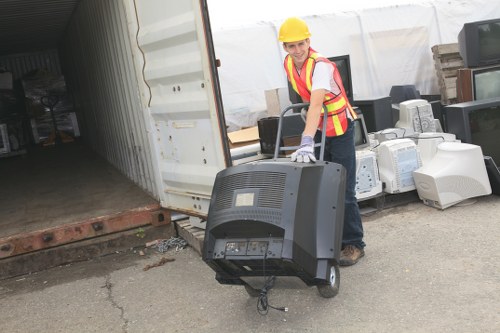 PPE, equipment and vehicles — Appropriate personal protective equipment, including gloves, high-visibility clothing, safety boots and eye protection, is supplied and must be worn. Equipment is maintained to manufacturer standards and inspected regularly. Vehicles used for waste removal and house clearance services are subject to routine safety checks, secure load procedures and safe driving policies. Mobile plant and lifting gear are operated only by trained personnel with valid authorisation.
Hazardous materials and waste segregation
The company maintains strict procedures for identifying, segregating and disposing of hazardous materials encountered during house clearances, such as solvents, asbestos-like materials, batteries and electronic waste. Suspected asbestos-containing materials are not handled by non-specialists and, where identified, the area is cordoned off and specialist contractors engaged. Waste streams are separated to maximise recycling and minimise landfill, supporting environmental responsibility in all rubbish removal operations. Manual handling and physical safety — Manual handling operations are planned to reduce risk: team lifts, mechanical aids and staging are used where necessary. Employees are trained in safe lifting techniques and encouraged to report any discomfort early. Work areas are kept tidy to reduce slips, trips and falls. Where worksites present uneven surfaces or structural instability, additional control measures such as guard rails and temporary supports are implemented.
 Incident reporting, emergency procedures and first aid — All incidents, near misses and unsafe conditions must be reported immediately through company procedures. First aid kits are available and designated first-aiders are on site during operations. Emergency plans cover fire, spill response and medical emergencies, with evacuation routes and assembly points communicated to staff and visitors. Lessons learned from incidents are used to update risk assessments and prevent reoccurrence.
Monitoring, review and continuous improvement — The effectiveness of this policy is monitored through routine site inspections, toolbox talks, audits and performance reviews. Accident and near-miss records are analysed to identify trends and training needs. The policy is formally reviewed at least annually or when there are significant operational changes. Management encourages staff participation in safety reviews and supports suggestions for improvement.
Communication and behavioural safety — Clear communication is essential: safety briefings are held before major clearance tasks, and documentation is available for all staff. The organisation promotes behavioural safety by recognising safe practices and coaching individuals where unsafe acts are observed. Everyone is empowered to stop work where they believe hazards may result in harm.
Commitment and acceptance — Kentish Town House Clearance commits to implementing this Health & Safety Policy across all its rubbish removal and house clearance services. By adhering to the procedures described, staff and contractors contribute to a safer workplace and a professional, responsible clearance service. This policy is endorsed by senior management and forms part of the contractual expectations for all operational activities.